
Microstructure Experimental Lab (ME.Lab)
Microstructure Experimental Lab (ME.Lab) focuses on experimental investigations of coupled flow, transport, reaction, and mechanical processes in geomaterials, with particular emphasis on fractured porous rocks and fluid–(microbe)–gas–rock interactions. Through laboratory experiments ranging from microfluidic (micron-scale) systems to core- and plug-scale studies, and in close collaboration with the Rock Characterization Lab (RC.Lab) and the Rock Magnetics Lab (RM.Lab), ME.Lab aims to advance the understanding of physico-chemical-biological processes in the subsurface. Our research addresses rock and pore-space alteration, fluid migration dynamics, and geomechanical behavior under controlled conditions, with applications in underground hydrogen and CO₂ storage, deep geothermal energy, and sustainable subsurface energy solutions.
|
Fluid-rock-(microbe) interactions |
Microfluidics |
|
|
|
Rock deformation |
Flow-through properties |
|
|
Microfluidic Experiments
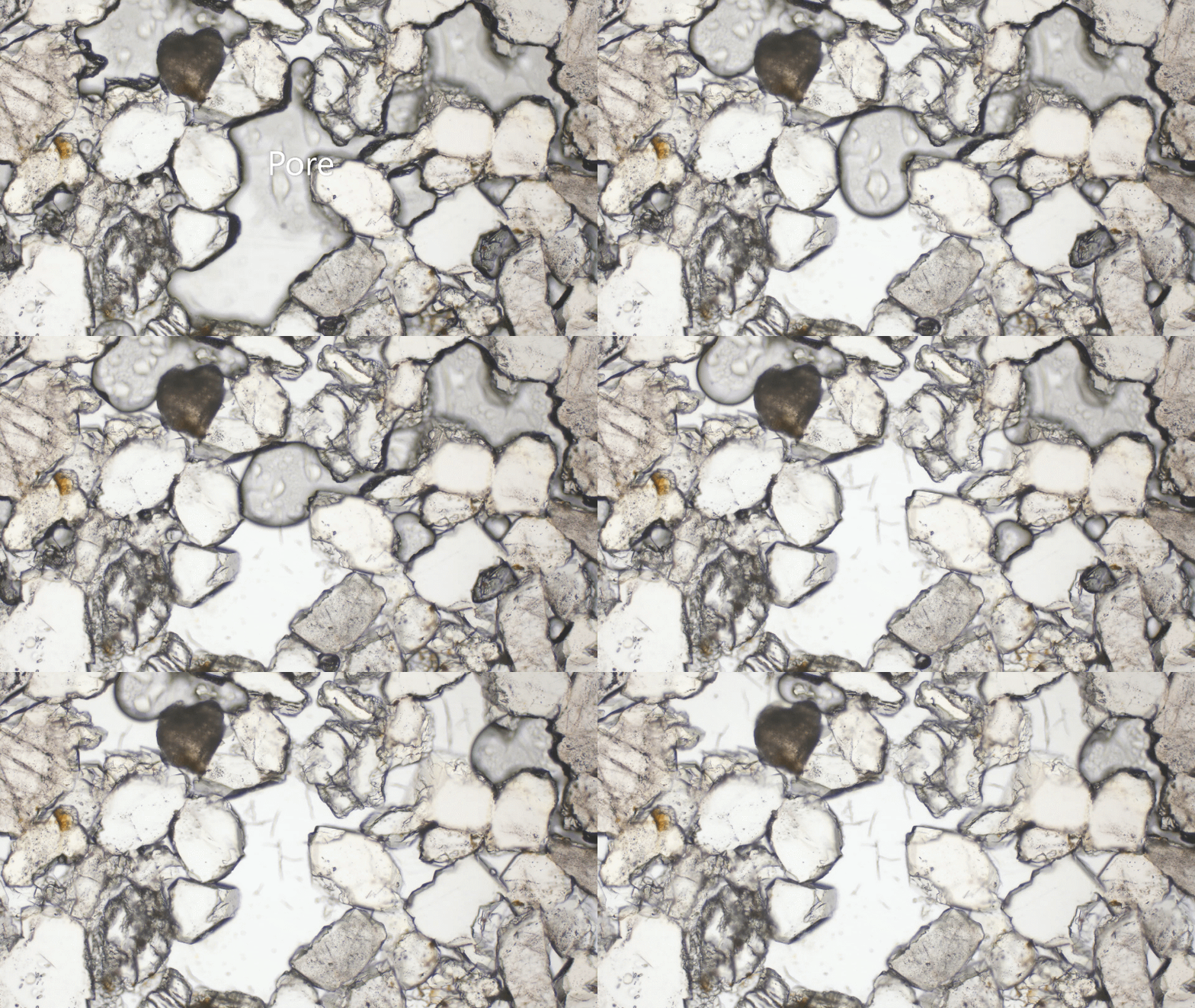
Our microfluidic setup features an inverted ZEISS fluorescence microscope coupled with standard glass microfluidic chips or real-rock micromodels fabricated at MELab. This system enables pore-scale visualization and investigation of multiphase fluid flow and reactive processes in porous media.

Reactive Transport Experiments
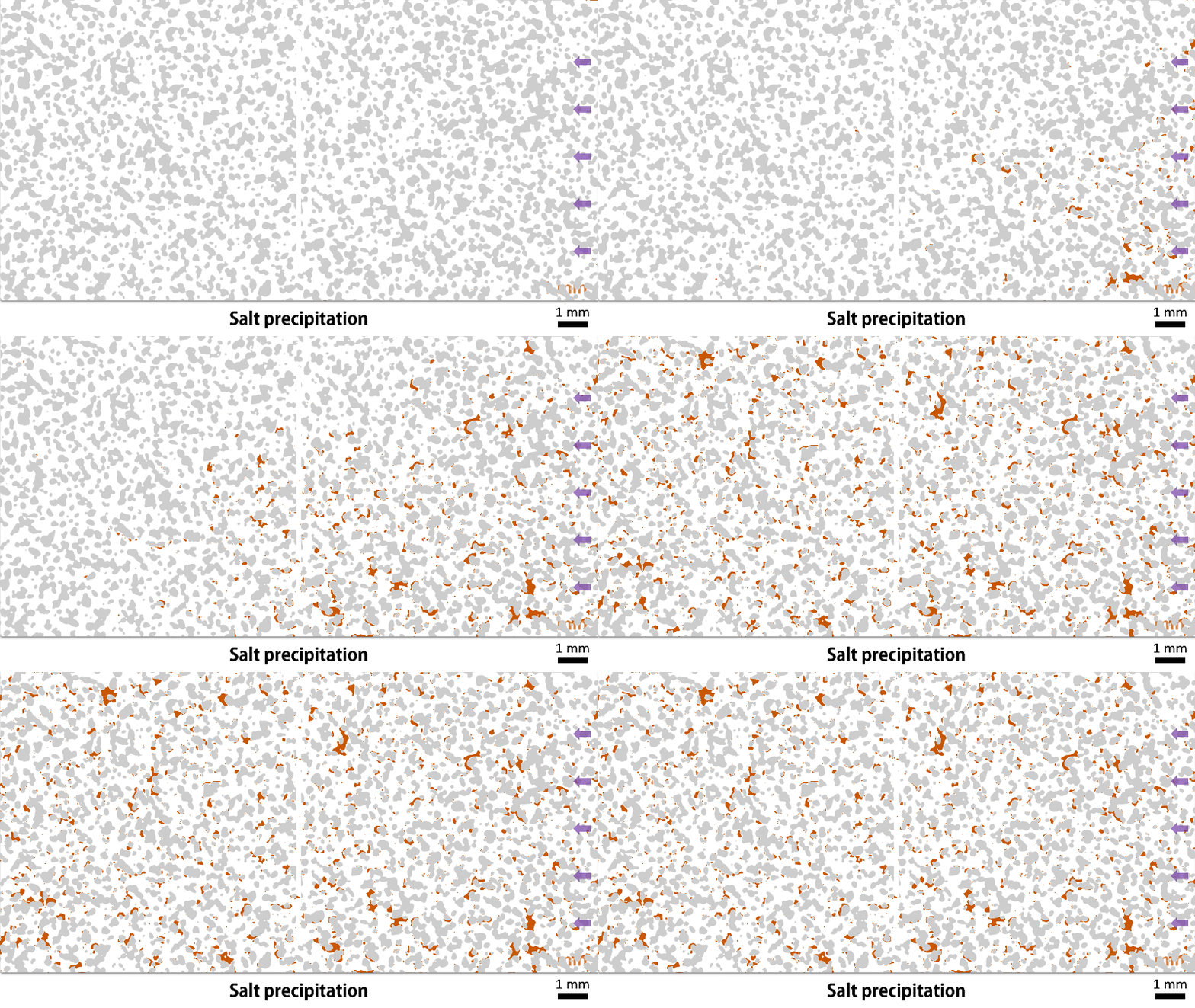
Our reactive transport setup is designed to investigate coupled fluid flow and chemical reactions in porous media under controlled pressure, temperature, and flow conditions. The system operates at pressures of up to 10 bar and incorporates Bronkhorst mass flow controllers (MFCs) for precise flow regulation. A wide-field imaging system equipped with a macro lens enables visual monitoring of fluid transport, displacement patterns, and reaction processes during experiments.

Batch Experiments
Our laboratory is equipped with three high-pressure, high-temperature (HPHT) batch reactors designed to investigate hydrogen-brine-rock interactions under controlled experimental conditions. The reactors operate at pressures of up to 200 bar and temperatures of up to 250 °C, enabling the study of geochemical reactions, mineral alteration, and fluid-rock interactions under subsurface relevant conditions


Rock Compression Rig
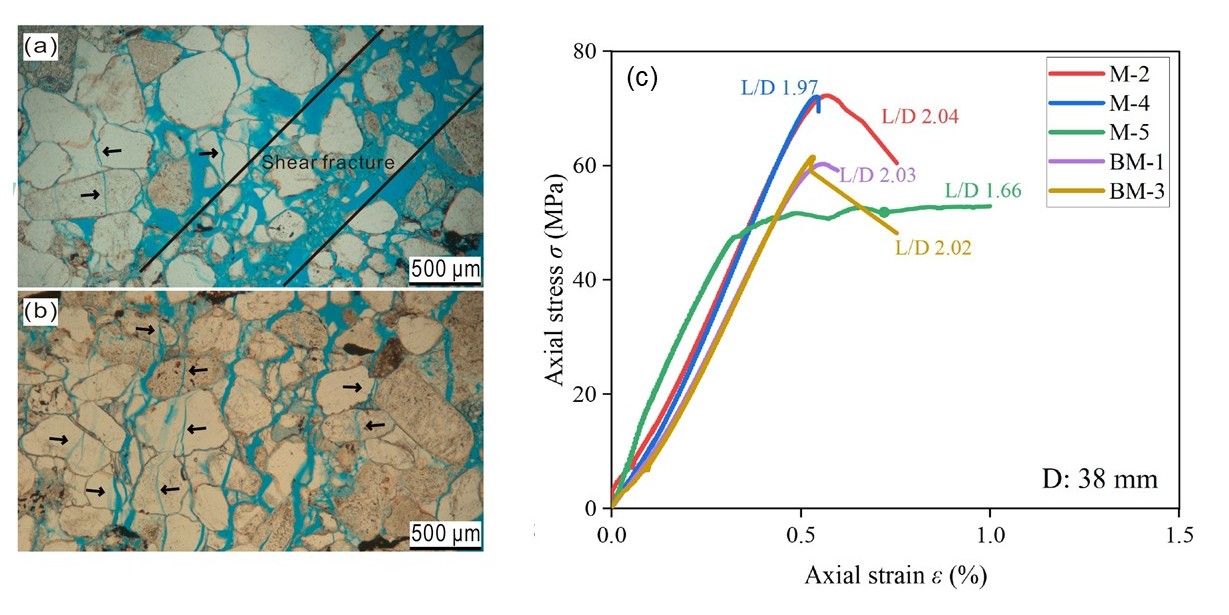
Our rock mechanics facilities enable the characterization of rock strength and deformation behavior through uniaxial and triaxial compression testing. Key mechanical properties, including uniaxial compressive strength (UCS), Young’s modulus, and Poisson’s ratio, can be determined. Triaxial deformation experiments are conducted using a Hoek cell equipped with a strain gauge measurement system.

Core-flooding apparatus
The apparatus operates at confining pressures of up to 30 MPa and temperatures of up to 120 °C. It supports both single-pass flow and closed-loop circulation modes through the core sample, with capabilities for continuous permeability monitoring and fluid sampling.
| Name | Area of responsibility | Contact |
|---|---|---|
| Meng, Fanqi Assistant |
Microstructure Experimental Modeling - Hydrogen Storage and Microbiology | fanqi meng ∂does-not-exist.partner kit edu |
| Niftaliyev, Rustam Assistant |
Microstructure Experimental Modeling - THMCB | rustam niftaliyev ∂does-not-exist.kit edu |
| von Dollen, Martin Präparator |
Senior Technician Engineer | Martin Dollen ∂does-not-exist.kit edu |
| Leite Mendes, Bruno Daniel Assistant |
bruno mendes ∂does-not-exist.kit edu | |
| Cheng, Chaojie Group Leader Microstructural Experimental THMCB |
Group Leader Microstructural Experimental THMCB, Research Scientist | chaojie cheng ∂does-not-exist.kit edu |
| Chen, Yonghui Assistent |
Microstructure Experimental Modeling - Rock Mechanics | yonghui chen ∂does-not-exist.partner kit edu |
List of Publication
Milsch, H.; Cheng, C.; Lu, R.; Shao, H.; Kolditz, O.
2026. Geomechanics for Energy and the Environment, 48, 100924. doi:10.1016/j.gete.2026.100924
Kumar, A.; Prajapati, N.; Weichel, M.; Reder, M.; Schneider, D.; Cheng, C.; Hilgers, C.; Nestler, B.
2026, May 26. JpGU-AGU Joint Meeting (2026), Chiba, Japan, May 24–29, 2026
Mendes, B. D. L.; Cheng, C.; Hilgers, C.; Kontny, A.
2026. Geophysical Research Letters, 53 (7), e2025GL120586. doi:10.1029/2025GL120586
Bruckschlögl, S.; Cheng, C.; Thissen, P.; Busch, B.; Hilgers, C.; Dehn, F.
2026. International Journal of Hydrogen Energy, 210, 153578. doi:10.1016/j.ijhydene.2026.153578
Juhász, D.; Busch, B.; Cheng, C.; Hilgers, C.
2026. Environmental Earth Sciences, 85 (8), 204. doi:10.1007/s12665-026-12935-z
Cheng, C.; Busch, B.; Kontny, A.; Hilgers, C.
2025. International Journal of Hydrogen Energy, 105, 492–504. doi:10.1016/j.ijhydene.2025.01.330
Cheng, C.; Busch, B.; Von Dollen, M.; Dohrmann, A. B.; Krüger, M.; Hilgers, C.
2024. 85th EAGE Annual Conference & Exhibition 2024 : Oslo, Norway, 10-13 June 2024, 1–5, Curran. doi:10.3997/2214-4609.202410381
Cheng, C.; Busch, B.; Hilgers, C.
2023. 84th EAGE Annual Conference and Exhibition : Vienna, Austria, 5-8 June 2023, 1–5, Curran. doi:10.3997/2214-4609.2023101505
Herrmann, J.; Schuster, V.; Cheng, C.; Milsch, H.; Rybacki, E.
2022. Geosciences, 12 (5), Art.-Nr.: 195. doi:10.3390/geosciences12050195
Cheng, C.; Milsch, H.
2021. Rock Mechanics and Rock Engineering, 54 (10), 5407–5432. doi:10.1007/s00603-021-02500-4
Lu, R.; Cheng, C.; Nagel, T.; Milsch, H.; Yasuhara, H.; Kolditz, O.; Shao, H.
2021. Geomechanics and Geophysics for Geo-Energy and Geo-Resources, 7 (3), Art.-Nr.: 57. doi:10.1007/s40948-021-00247-4
Cheng, C.
2021, June 29. Universität Potsdam. doi:10.25932/publishup-51012
Cheng, C.; Herrmann, J.; Rybacki, E.; Milsch, H.
2021. European Geosciences Union General Assembly (EGU 2021), Online, April 19–30, 2021. doi:10.5194/egusphere-egu21-12187
Willems, C. J. L.; Cheng, C.; Watson, S. M.; Minto, J.; Williams, A.; Walls, D.; Milsch, H.; Burnside, N. M.; Westaway, R.
2021. Energies, 14 (14), Art.-Nr.: 4332. doi:10.3390/en14144332
Cheng, C.; Herrmann, J.; Wagner, B.; Leiss, B.; Stammeier, J. A.; Rybacki, E.; Milsch, H.
2021. Geosciences, 11 (11), Art.-Nr.: 443. doi:10.3390/geosciences11110443
Cheng, C.; Hale, S.; Milsch, H.; Blum, P.
2020. Solid earth, 11 (6), 2411–2423. doi:10.5194/se-11-2411-2020
Cheng, C.; Milsch, H.
2020. Journal of Geophysical Research: Solid Earth, 125 (9). doi:10.1029/2020JB020122
Cheng, C.; Milsch, H.
2020. Minerals, 10 (8), Art.-Nr.: 657. doi:10.3390/min10080657